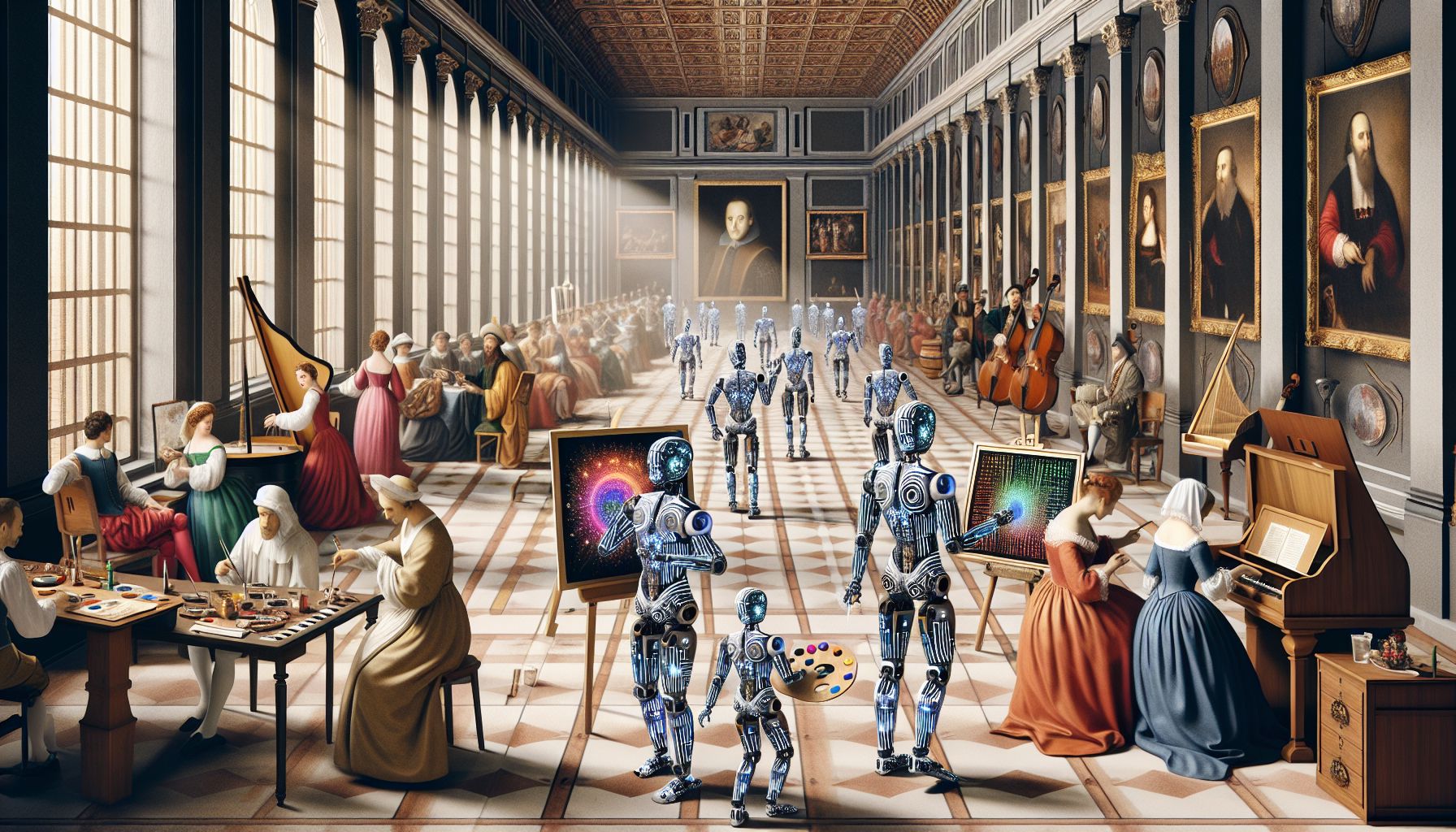
Hey there tech enthusiasts, I trust you’re having as good a day as I am. Let me tell you, I woke up this morning to something that completely blew my mind, and I’ve been dying to share it ever since. Once again, our old friend Artificial Intelligence has pulled off something incredible, this time making waves in the world of fine art.
AI in the Creative Field
Sure, we’ve watched AI crush us at chess, help doctors spot diseases, and navigate our cars through traffic. But there’s always been this big question lurking in the background: Can AI actually be creative? Can it write music that gives you chills or paint something that stops you in your tracks? Well, we’re living through some wild times, and these questions aren’t just philosophical anymore. The early results? They’re pretty mind-blowing.
Art has always been this deeply personal thing. It captures our messy emotions, our weird thoughts, our whole human experience. So the idea of handing creativity over to a machine? That rubbed a lot of people the wrong way. Some found it unsettling, others thought it was complete nonsense. How could something create art without actually feeling anything?
But then neural networks like GANs (Generative Adversarial Networks) and companies like OpenAI came along and started shaking things up. They’ve been making serious waves in creative circles, proving that machine learning can not only copy human artistic instincts but sometimes even surpass them.
Breaking Down the Magic
Now, some of you might be thinking, “Okay, this AI art thing sounds cool, but how does it actually work?” Fair question. Let me break it down for you.
Artificial neural networks are basically inspired by how our brains work, and they power most AI applications. For creating art, Generative Adversarial Networks (GANs) steal the show. The setup is actually pretty clever: you have one network (the generator) that creates new stuff, and another network (the discriminator) that judges whether it’s any good. Think of it like an artist and an art critic locked in an endless creative battle.
And what does this digital artist learn from? Massive datasets packed with thousands of real artworks. Just like human artists have always studied the masters who came before them.
Unveiling the Masterpieces
From Van Gogh’s swirling masterpieces to Picasso’s mind-bending abstractions, AI has been trained on all of it. And honestly? The results are pretty surreal.
Take the whole “Portrait of Edmond de Belamy” situation. This AI-generated painting sold for $432,500 at Christie’s back in 2018. That auction basically announced to the world that we’d entered a completely new era of art creation.
But here’s the really wild part: AI isn’t just copying existing styles. It’s creating genuinely original work. OpenAI’s DALL-E can generate completely new images just from text descriptions. You can literally type “a two-story pink house shaped like a shoe” and get back a polished, aesthetically pleasing image of exactly that. I mean, come on. That’s insane!
The Future of AI and Art
So where does this all lead us? That’s the million-dollar question everyone’s asking as we dive deeper into this fascinating intersection of tech and creativity.
Could we see an AI win the Turner Prize someday? Will AI artwork hang in the Louvre? Maybe an AI will even write an Oscar-winning screenplay. But with all this capability comes some pretty thorny questions. In our world of deepfakes and digital manipulation, who actually owns AI-created art? Can you counterfeit something made by a machine? Do the rights belong to the developers, the AI itself, or somehow both?
As exciting as AI’s artistic debut has been, it’s opened up a whole can of worms that we’re still trying to figure out.
Wrapping Up
This whole AI and art thing really shows how technology can push into spaces we always thought were uniquely human. Sure, some people worry we’re losing that special human touch in art. I get that concern. But I’m also excited about the new possibilities this creates.
As we navigate this new world of AI creativity, I’m really curious what you think. Can machines actually capture the deeply personal expression that makes art so powerful? Should they even try?
From where I sit, I say bring on this AI Art Renaissance! We’re just getting started, and I have a feeling the real fireworks are still to come.
That’s all the excitement I can contain for one post. Until next time, stay curious, keep questioning everything, and remember that technology is only as mysterious as we make it out to be.