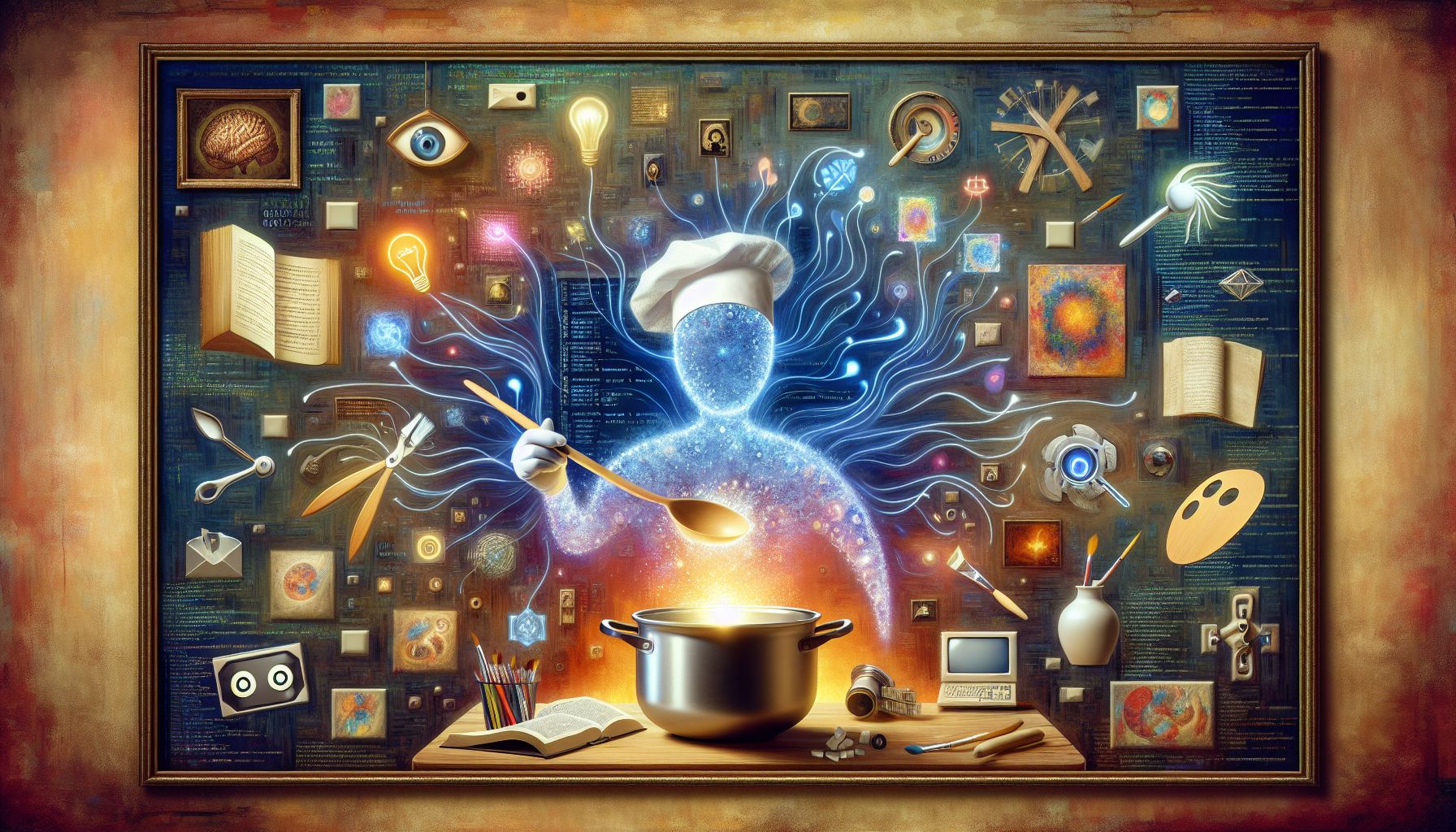
In case you haven’t noticed folks, we’re standing at the start of a new creative revolution, where always-learning microchips and digits replace paintbrushes and canvases (Well, not totally replace, but you get my point). Seems like a crazy episode of Black Mirror? Pinch yourself folks, it ain’t no dream. Welcome to the world of AI in creative arts.
Artificial Intelligence: The Unexpected Maestro
Art, for the longest time, has been considered the stronghold of human intellect, creativity, and emotion. A realm unassailable by AI, or so we thought. Enter OpenAI, with their teen prodigy GPT-3 wielding its linguistic prowess with the deftness of Shakespeare, the wit of Wilde, and the depth of Dostoevsky. And if you think this is the peak of AI’s creative capabilities, wait until I tell you about the marvels happening in the visual arts arena.
The New Picasso: Not a Human
Remember the days when the term AI-art brought to mind crude caricatures or bizarre amalgamations that looked like they were straight out of a toddler’s doodle pad? Well, not anymore! DeepArt, DALL-E (brought to you by the tech gurus at OpenAI), and the likes are consistently churning out pieces that would give Renaissance masters a run for their money. From generating original images of ‘an armchair in the shape of an avocado’ to bringing your most abstract descriptions to life, these AI-powerhouses are just getting warmed up.
The cherry on the pie? AI art getting the nod of validation from traditional art connoisseurs. Cast your mind back to 2018, when Christie’s sold an AI-generated artwork for a whopping $432,500!
The Unseen Challenges
For all the wonder it’s creating, AI in creative arts is not without its challenges. To start with, AI’s creativity is limited by the data it’s fed. No matter how sophisticated the algorithm, it’s essentially mimicking or remixing existing styles, not creating something entirely new out of thin air. Until AI can independently conceive emotions and experiences (a scary thought, eh?), true creativity remains a human preserve.
Then there’s the looming question of attribution and copyright laws. Who owns the rights to AI-created works, the developer who created the AI? The AI itself? Or the person who provided the input that led to the final output? A ‘who-done-it’ scene straight out of a classical detective story, if you ask me!
The Crystal Ball Vision: What’s Next?
In the future, as AI systems continue to polish their creative chops, we might see them collaborating more intensely with artists, writers, and musicians. It’s not about machines taking over our creativity, but expanding it, opening new doors of imagination, pushing human artists to innovate beyond current limits.
Imagine an AI system that could convert a sentence description into an entire movie scene, or one that could design unique and personalized clothing based on individual preferences aggregated over time. The possibilities are mind-boggling, exciting, and a wee bit intimidating, if I’m honest.
Final Brush Strokes
As we surge ahead on this tech-driven creative rollercoaster, I love how AI is enabling art to evolve, yet again. It brings to mind the birth of photography, initially viewed as a threat, then gradually accepted as an art form in its own right. Maybe, just maybe, the day isn’t too far when AI-made creations occupy a similar space in our hearts and galleries.
AI in creative arts is definitely the exciting new kid on the block. But as much as we adore this wunderkind, let’s not forget the old adage, “Garbage in, garbage out”. It’s our responsibility to feed AI with meaningful and unbiased data, lest our AI-driven Mona Lisa becomes an AI-generated monstrosity!
On that note, signing off for today, folks! Keep exploring, keep innovating, and remember, in the great confluence of art and technology, it’s the human spirit that must shine brightest.
As for me, I’m off to pester GPT-3 into penning a sequel to my favorite sci-fi novel. Wish me luck!