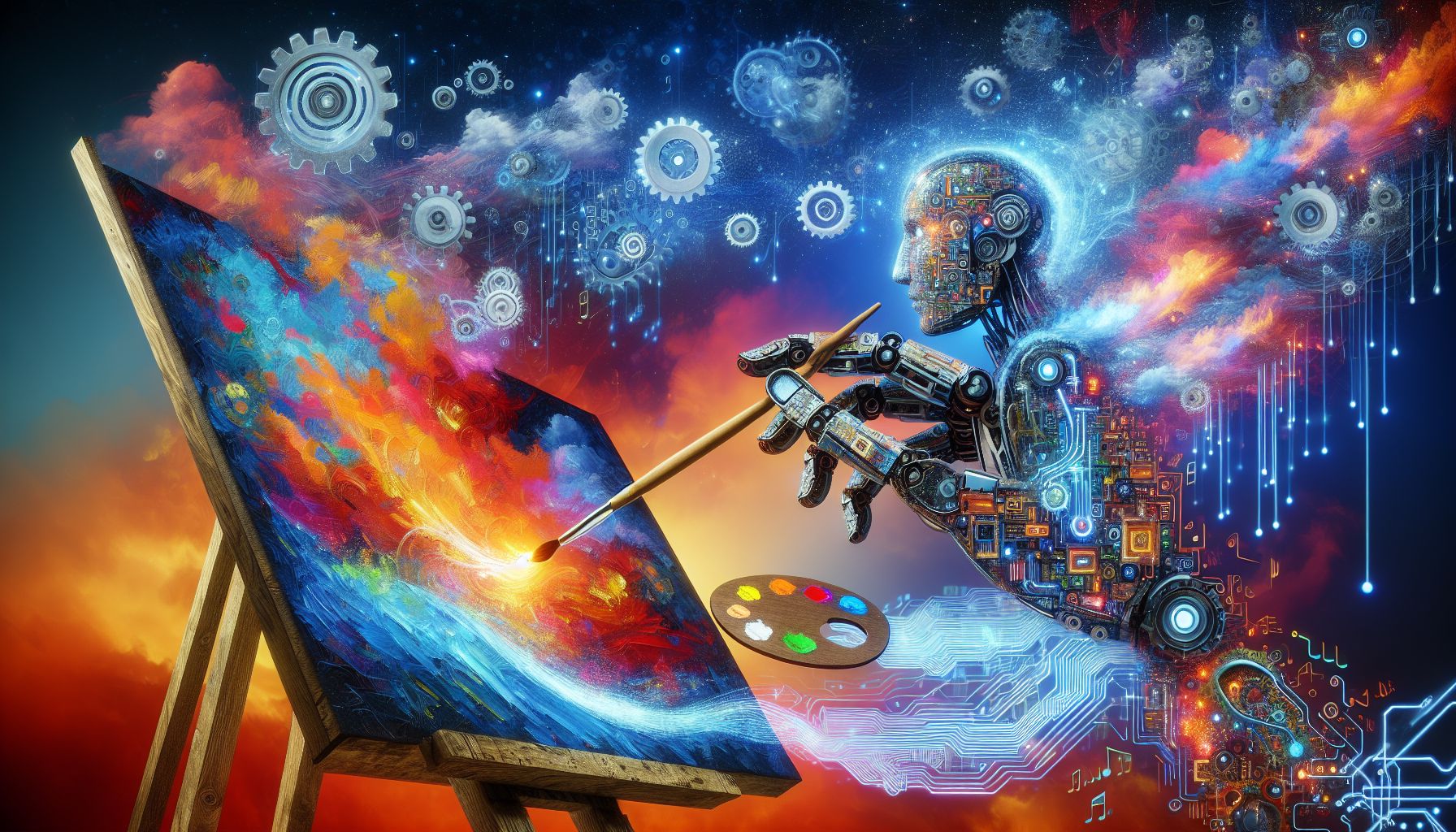
Good morning, afternoon, or evening, wherever you are in the virtual cosmos, fellow tech nerds! We’re back with another slice of techno-utopian goodness. Today’s topic is a little unorthodox, and it’s sure to shake up our usual conversations. We’re stepping out of the comfort zone of algorithms and scripting and diving headfirst into the chaotic world of arts. Yes, you read that right. Arts. The territory once thought forever beyond the reach of cold, calculating machines. Ladies and gentlemen, we’re talking about AI in creative arts.
AI: Not Just for Geeks Anymore
AI’s applications, as we’ve already seen, are near limitless, from self-driving cars to personalized shopping suggestions (you-do-you, Amazon). But here’s something you may not have expected: their invasion into the sacred domain of creativity and arts. Now, before some of you start wielding pitchforks and proclaiming the end of human creativity, let me assure you, we’re far from that happening. Or are we?
Meet the AI Van Gogh
Let’s kick off with an anecdote. Not too long ago, an AI-generated painting, aptly named ‘Portrait of Edmond de Belamy’, ruffled quite a few feathers when it sold for a staggering $432,500 at Christie’s, one of the world’s leading art auction houses. Mind you, this wasn’t some modernist smear-on-a-canvas type of art. The painting, albeit blurry, is strikingly reminiscent of European portraiture.
If you’re raising an eyebrow right now, good! That’s the spirit of curiosity we love here. The work was created by generative adversarial networks (GANs). Picture two AIs, one constantly trying to create convincing art pieces, and the other ruthlessly critiquing until the first one nailed one close to a masterpiece. Sort of a techy version of the torturous artist-critic relationship, isn’t it?
AI Music, now on Your Playlist
Let’s not limit the AI’s potential to visual arts alone. Ever heard of OpenAI’s MuseNet? The brainchild of OpenAI (yes, their name is as Star-Trek as their work), MuseNet generates original songs across dozens of genres and styles. Whether you’re a fan of Mozart, the Beatles, or Lady Gaga, MuseNet has something to add to your playlist.
But AI music isn’t just about mixing algorithms and Mozart. It’s also making strides in personalized music creation. Remember when we got thrilled by personalized playlists? How about taking it a notch higher with personalized music compositions.
Overcoming the ‘Mechanical’ Hurdle
Of course, it’s not all roses and masterpieces yet. One of the major criticisms of AI art is that it lacks ‘soul’. Detractors argue that AI, at its best, can only recreate or combine existing aesthetics and styles but can’t bring anything genuinely ‘new’ to the table. This argument is similar to our earlier debates on whether AI can surpass human intelligence. As with those debates, only time will tell.
The Future: A Collaborative Canvas?
So, here’s the million-dollar question: Is AI going to replace human artists? As much as I love speculating, my guess is as good as yours. So far, AI has shown remarkable capabilities in emulating, and in some cases, enhancing human creativity. The day might not be far when we see AI-human collaborative artworks or AI-composed chart-topping tracks.
But will an AI ever win a Grammy or write a Pulitzer-winning novel? Hmmm. For now, let’s leave that thought hanging in the air as a possibility worth watching.
Stay tuned for more updates from the edge of the tech frontier, where binary meets brushstrokes and algorithms harmonize with the aria. Until the next time, this is your friendly neighborhood tech-nerd, signing off. Don’t forget to dream in binary tonight!