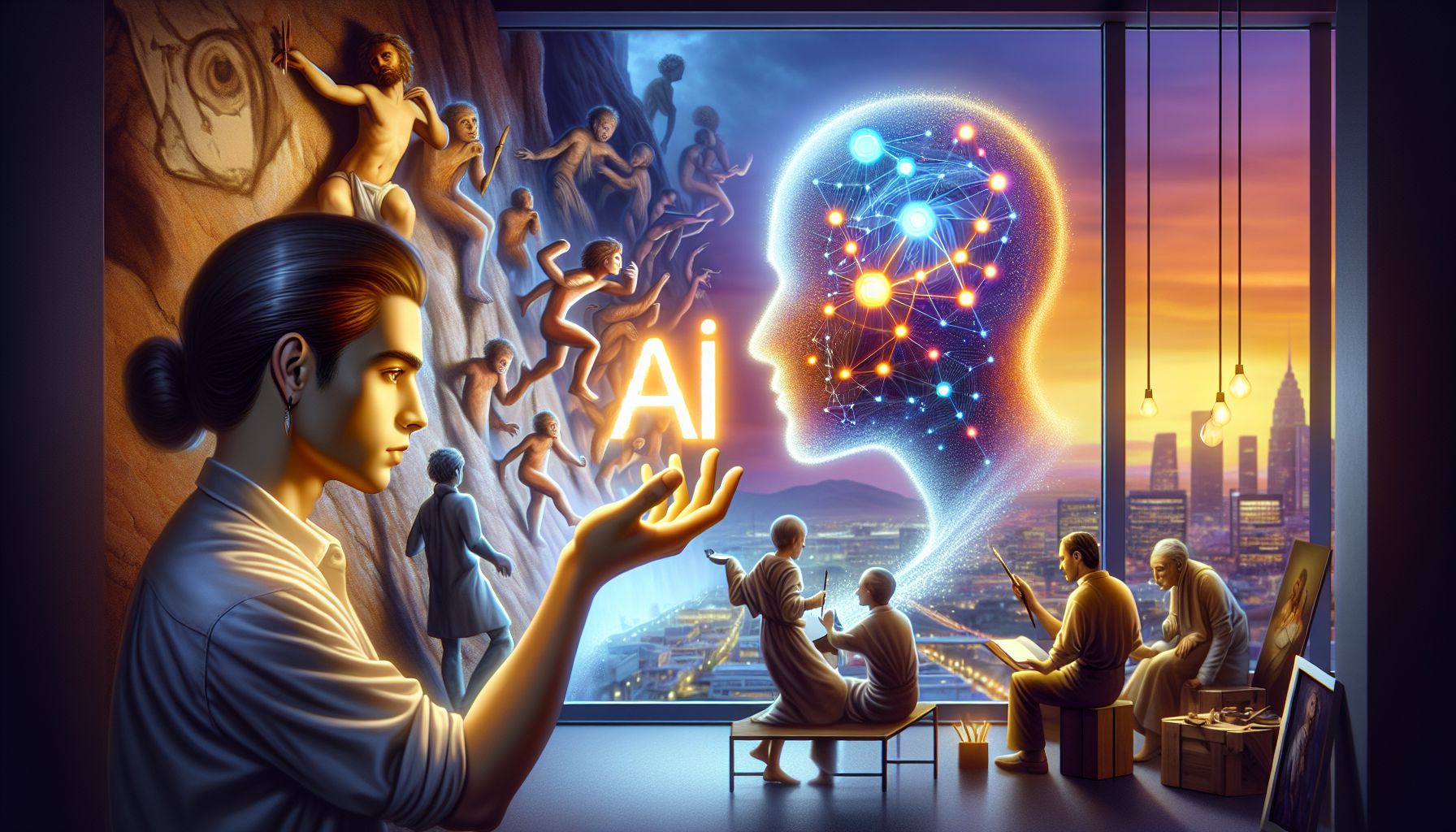
As we move further into the 21st century, emerging technologies keep changing how we work, create, and live. I’ve been particularly fascinated by one trend lately: Artificial Intelligence making serious inroads into creative fields like writing and visual art. Sure, AI has been making waves in healthcare, finance, and transportation for years. But watching it tackle something as fundamentally human as creativity? That’s genuinely surprising.
Artificial Intelligence: The New Picasso?
Let me back up for a second. AI is basically a collection of technologies that mimic human intelligence. Forget the sci-fi movies with sentient robots taking over the world. Real AI is much more practical. It’s designed to handle tasks that used to require human smarts, like writing coherent sentences, creating images, or even painting portraits.
But can a computer create art with the same depth, emotion, and symbolism as a human artist?
Honestly, I’m not sure we can answer that yet (and we’d probably argue about it for hours anyway). But here’s what I do know: AI-produced artwork is getting serious attention. Case in point: in 2018, Christie’s auctioned off an AI-generated portrait called “Portrait of Edmond de Belamy” for $432,500. That wasn’t just expensive art, it was the first AI artwork ever sold at a major auction house.
The AI Brush Stroke: Algorithms as Artists
So how does AI actually make art? The answer is Generative Adversarial Networks, or GANs. Picture this: you have two AI systems working together. One (the Generator) creates artwork, while the other (the Discriminator) plays art critic, constantly judging whether the work looks “real” or not. They keep going back and forth until the Generator gets so good that its art becomes nearly impossible to distinguish from human-created pieces.
But AI isn’t stopping at visual art. Writing is fair game too. OpenAI’s GPT-3 can churn out articles, reports, and creative writing that’s honestly pretty close to what a human might produce. Sometimes uncomfortably close.
Merging AI With Human Creativity: A Renaissance?
Here’s the thing that surprised me: most artists and writers I’ve read about aren’t panicking about being replaced. They’re actually excited about what AI might help them do. Think of it as a really sophisticated creative tool, not a replacement for human imagination. Writers can use AI to break through creative blocks. Artists can experiment with styles they’ve never tried before.
I think the key is collaboration, not competition. AI becomes another brush in the artist’s toolkit, another way to explore ideas.
Schools are starting to catch on too. More educational institutions are figuring out how to weave AI into their art and writing programs, which could completely change how we teach creativity.
Conclusion: The Shape of Art to Come
The whole AI-meets-creativity thing is fascinating, but I’ll be honest: it’s also pretty uncertain territory. AI can generate impressive results, but it doesn’t understand the emotional weight of a brushstroke or the cultural context behind a poem. At least not yet.
What I am sure about is that AI isn’t going anywhere. Whether we like it or not, it’s becoming part of how we create and consume art. The question isn’t whether to resist it, but how to use it thoughtfully.
Van Gogh once said, “I dream my painting, and then I paint my dream.” Maybe someday we’ll say something similar about AI: “I train my algorithm, and then it paints what it learned.”
I don’t think AI spells doom for human creativity. Instead, it might be opening up entirely new ways to make art, tell stories, and express ideas. The trick is figuring out how to blend human imagination with machine capability in ways that actually make both better.
Tags: #AI, #ArtificialIntelligence, #Creativity, #Writing, #GANs, #OpenAI, #MachineLearning