Welcome back to another day exploring emerging technologies. Today, I want to look at something that’s been fascinating me lately: how artificial intelligence is changing creativity, especially in writing, art, and design.
Introduction: Creativity Meets AI
We’ve all heard about AI in self-driving cars and medical diagnostics, where it’s boosting productivity and efficiency. But when AI enters the creative world? That’s where things get really interesting. We’re seeing art that changes over time, stories that write themselves, and designs born from algorithms. This isn’t science fiction anymore—it’s happening right now.
The Proliferation of AI in Art
You wouldn’t normally think of artificial intelligence algorithms as creative, right? Machines are logical and methodical. But thanks to advances in deep learning and neural networks, AI can create some genuinely compelling art. Take OpenAI’s DALL-E—it’s a generative model that creates original images just from text descriptions. Pretty wild when you think about where this is all going.
Beauty and the Machine
AI artwork has really taken off in recent years. Remember “The Portrait of Edmond de Belamy”? An AI algorithm from the Paris art collective Obvious created it, and it sold for $432,000 at Christie’s. The piece was made using Generative Adversarial Networks (GANs), and honestly, it might be just the beginning of AI-generated art becoming mainstream.
AI Writes the Rules
AI has also jumped into creative writing. Feed algorithms enough literary works, and they can produce prose and poetry that’s surprisingly deep and meaningful.
GPT-3’s Creative Prowess
OpenAI’s GPT-3 is leading the charge here. This language model generates eerily human-like text and has been used to write articles, poems, and even entire books. It shows how far machine learning and natural language processing have come, but it also raises some big questions about creativity itself. Can a machine actually be creative? That’s a debate that keeps philosophers and technologists arguing.
Sexual_poetry_Sophia the Robot’s Creative Endeavour
It’s not just tech companies getting into this space. Sophia, the humanoid robot from Hanson Robotics, worked with artist Andrea Bonaceto to create a digital artwork called “Sophia Instantiation.” They sold it as an NFT for almost $700,000. When you combine AI with blockchain technology like this, you’re really reshaping what art means in our digital world.
The Fourth Industrial Revolution: AI Pioneering the Design Landscape
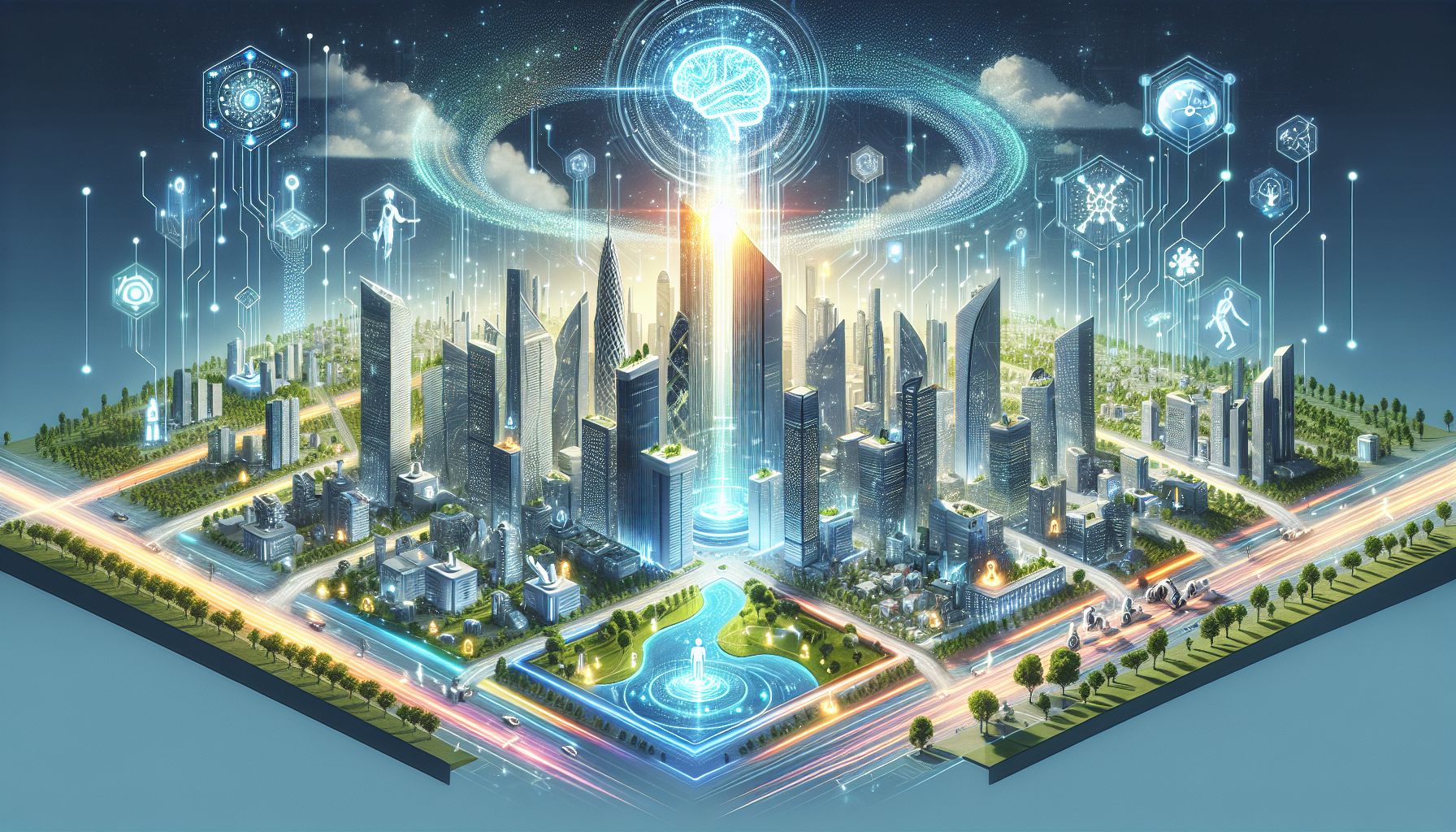
Beyond creating content, AI is making serious waves in design and architecture. Complex algorithms are helping designers and architects build things that are more sustainable, efficient, and frankly, pretty amazing to look at.
Parametricism 2.0
Architects like Patrik Schumacher from Zaha Hadid Architects talk about “Parametricism 2.0″—a design approach that uses AI and machine learning to create highly responsive designs. This emerging method could completely transform how our cities look and feel.
Conclusion: Paradigm Shift
As we get deeper into the AI age, I’m seeing a real shift in how we think about art and creativity. These technological advances aren’t just improving creative processes—they’re completely redefining them. Tools like GPT-3, DALL-E, and parametric design software are creating a whole new category of AI-enhanced artistry that pushes creative boundaries in ways we never imagined.
When AI and creativity come together like this, they’re breaking down what we thought was impossible. It’s an exciting space to watch if you’re interested in emerging technologies. Whether this challenges the core of what creativity means or elevates it to new levels—well, we’ll have to wait and see.