Introduction
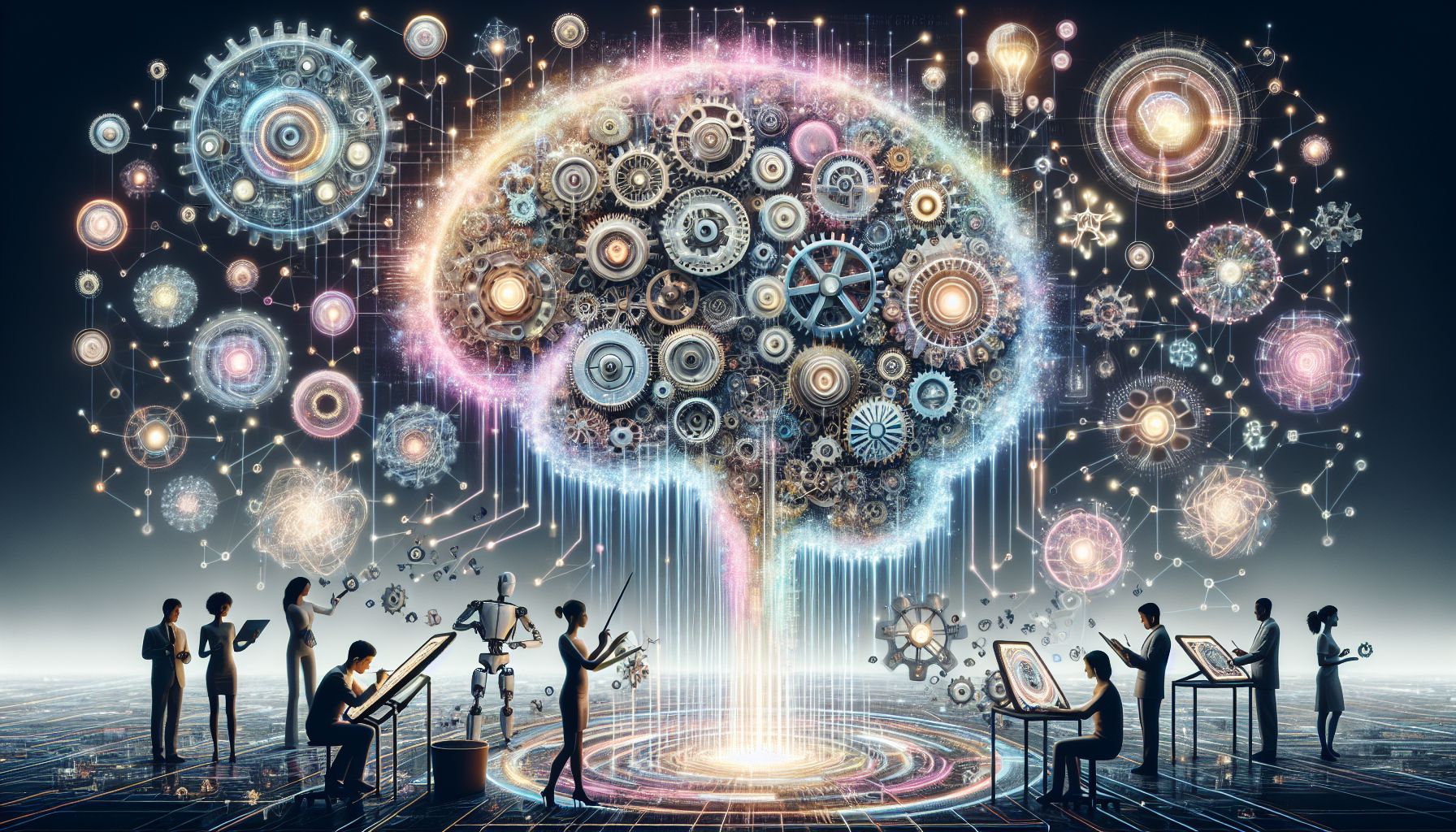
While tech enthusiasts and experts get excited about AI breakthroughs, there’s one area that really catches my attention: how artificial intelligence is changing creativity itself. Artists, entrepreneurs, and researchers are figuring out ways AI can help boost human creativity, or sometimes even replace it entirely. This technology has serious potential, though it’s pushing us to rethink what we thought we knew about imagination and creative work.
The Intersection of AI & Creativity
AI and creativity make for an interesting combination. Machine learning is being used in some pretty clever ways to boost our creative abilities. Writing, artwork, music, marketing — AI is shaking things up across the board in ways nobody saw coming. What really gets me is how these technologies can actually mimic human creativity, and sometimes go beyond what we thought was possible.
AI Writing Tools
Take content generation tools like OpenAI’s GPT-3. This thing can write poems, stories, articles — you name it — and the results often sound surprisingly human. GPT-3 learned from billions of text examples, so it predicts what words should come next based on what you give it. The results can be genuinely impressive. Sometimes the writing quality rivals what human writers produce, which is both exciting and a little unsettling.
AI in Art & Design
Art is where things get really wild. Remember when that Paris art collective Obvious sold an AI-created painting for $432,500 at Christie’s? That artwork came from a GAN (Generative Adversarial Network) algorithm, and it made headlines everywhere. Art critics and tech people had heated debates about what it all meant. Design is getting the AI treatment too. These tools can create visual presentations and graphic designs that would normally require years of human training and experience.
AI in Music Composition
Music is going through the same transformation. AI tools like OpenAI’s MuseNet and Jukin’s AIVA use machine learning to compose everything from classical symphonies to pop songs. They analyze huge collections of musical pieces, then create original melodies that can surprise even experienced composers. Some of this AI-generated music is genuinely catchy and well-structured.
The Effect of AI on Human Creativity
Here’s the big question: does AI help human creativity or hurt it? Rather than seeing AI as competition, many artists, writers, and musicians are actually teaming up with these tools to push their work in new directions.
AI’s knack for generating unexpected ideas has turned out to be pretty valuable. It can spark artistic exploration in directions people might not have considered. Designers can use AI to handle the boring, repetitive parts of their jobs, freeing them up to focus on bigger concepts and execution. Writers dealing with creative blocks can get fresh ideas and new perspectives from AI tools.
There’s also a democratizing effect happening. People without traditional creative training can use AI to make impressive art, music, or writing. AI becomes a kind of creative equalizer, lowering the barriers to entry for artistic work. Whether that’s good or bad probably depends on your perspective.
Conclusion
AI-powered creativity excites some people and worries others. The idea of machines making art, writing poetry, or composing music feels dystopian to many. But if we think of AI as a creative assistant rather than a replacement, it might actually lead to more art, more music, and more interesting stories being created.
Of course, this raises some tough questions about intellectual property rights, artist attribution, and what creativity even means anymore. As AI gets more sophisticated, we’ll need to work through these issues. But dealing with these challenges might help us develop a broader, more inclusive understanding of what creativity can be.
This field moves fast, with new developments happening constantly. How we adapt to these changes and use them to enhance human creativity will shape our collective creative future. It’s definitely an interesting time to be paying attention to this space.