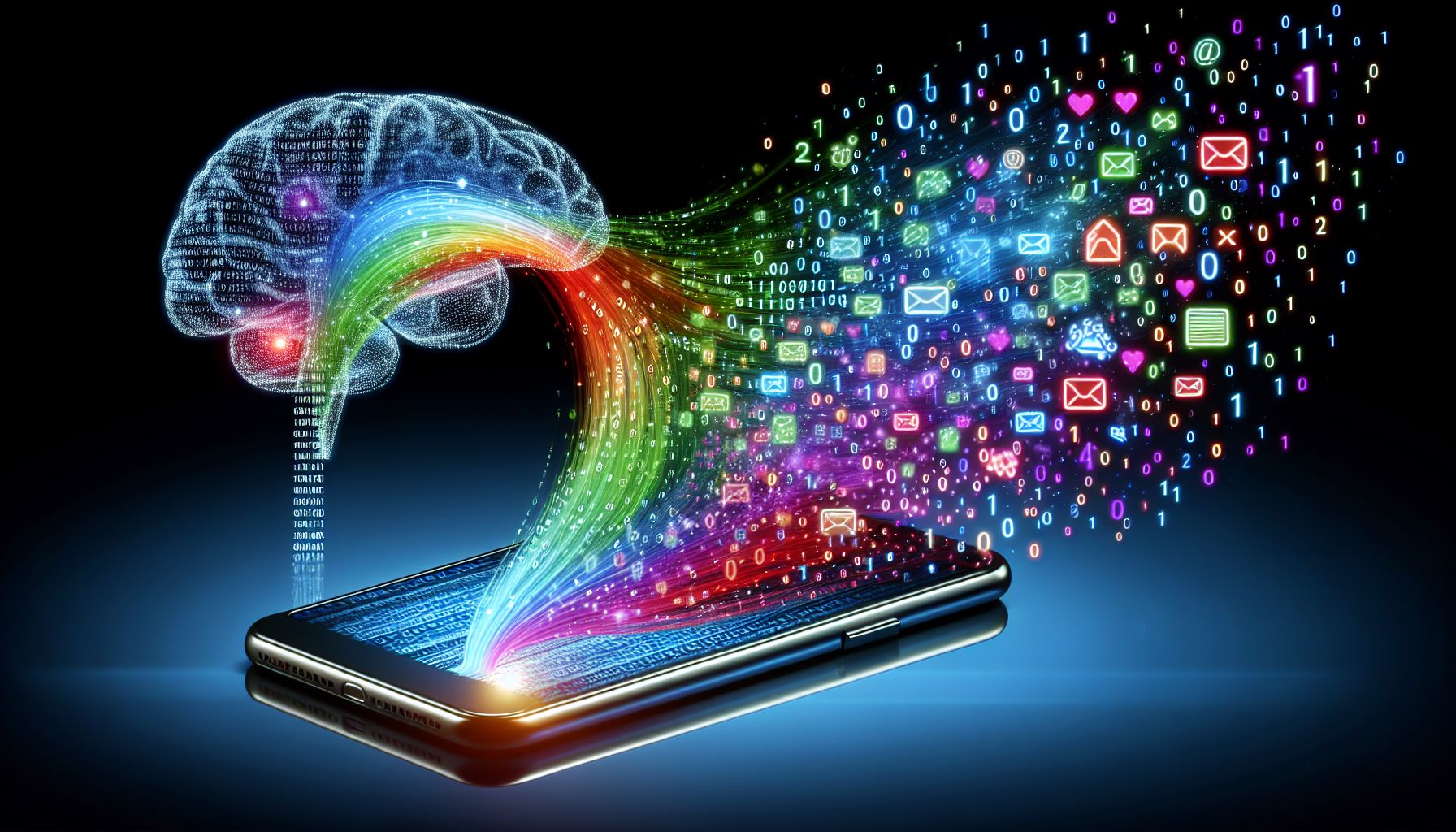
Hello there tech junkies! Better buckle up today as we dive into an area that’s changing fast, Communication!
Austin, we have a problem! Traditional communication methods just aren’t cutting it. Why do we have to endure needless conference calls, overflowing email inboxes, and manual scheduling hassles? Enter our savior, our knight in coded armor, Artificial Intelligence. Specifically, we’re talking about Deep Learning and how it’s revamping communication methods and leading us toward a techno-utopian future.
Introduction: In the Deep End
For the neophytes among us, let’s quickly break down what deep learning entails. Deep Learning is a subset of Machine Learning, falling under the umbrella term Artificial Intelligence (AI). Deep learning algorithms emulate the human brain’s structure and function, think networks of algorithms connected like neurons. It ‘learns’ from vast amounts of data, with its proficiency improving as it digests more and more data.
We see deep learning in everyday scenarios like Google’s voice recognition system, or Facebook’s automatic tagging system. Now, it’s creating a powerful shift in how we communicate in this tech-driven, increasingly remote world.
Body: Deep Learning & Communication, A Match Made in Binary Heaven
Revolutionizing Email Communication
Starting with a critical cog in our communication wheel, Emails. Deep learning algorithms have customized filters that ensure important mails go straight to your inbox and spam stays out. It goes a step beyond simple keyword recognition, understanding the sender’s behavior, your interaction patterns, and more to continuously learn and refine the sorting process.
Further, with Gmail’s Smart Reply and Smart Compose features, we have AI using deep learning to suggest responses or auto-filling your sentences, all while keeping the tone and context intact. Efficient or what?
Streamlining Calls & Meetings
Surely you’ve loathed meetings or calls that could’ve been an email, right? Artificial Intelligence is coming to our rescue again. Machine learning algorithms can transcribe and summarize meeting notes, track action items, and even analyze sentiments in real time. Post-meeting, these notes can be quickly shared for everyone’s reference. It dramatically reduces both redundancies in communication as well as manual work.
Personalizing Customer Interaction
Chatbots, everyone’s favorite customer service agent! But the latest generation of intelligent chatbots powered by deep learning takes customer service to another level. These aren’t just responding with pre-coded answers but understand queries in context, learn from past interactions, and provide a personalized, human-like response.
Facilitating Team Collaboration
Easy collaboration and clear communication are non-negotiable for remote teams. AI-based platforms are helping teams prioritize tasks, automate routine jobs, identify errors, and learn over time to enhance performance and efficiency. Deep learning algorithms analyze data, predict trends, and manage workflows without any human intervention.
For instance, Google’s AI Hub allows team members to share, collaborate, and implement AI models effortlessly. As they say, teamwork makes the dream work, eh?
Conclusion: Ready for a Techno-Utopia?
There’s no doubt that deep learning is about to significantly improve our communication methods. By merging human intervention with automated AI capabilities, we get the perfect blend of efficiency, precision, and personalized touch.
However, techno-utopia isn’t an end destination but a journey. Deep learning technology is still learning (pun intended!). It needs to overcome challenges like privacy concerns and ethical issues to realize its full potential. But considering its massive contribution so far, we can expect major improvements in communication methods.
That’s it for today, folks. Do you use any AI-based tool that’s enhanced your communication? Feel free to share your experience below. Stay curious, stay tech-savvy!