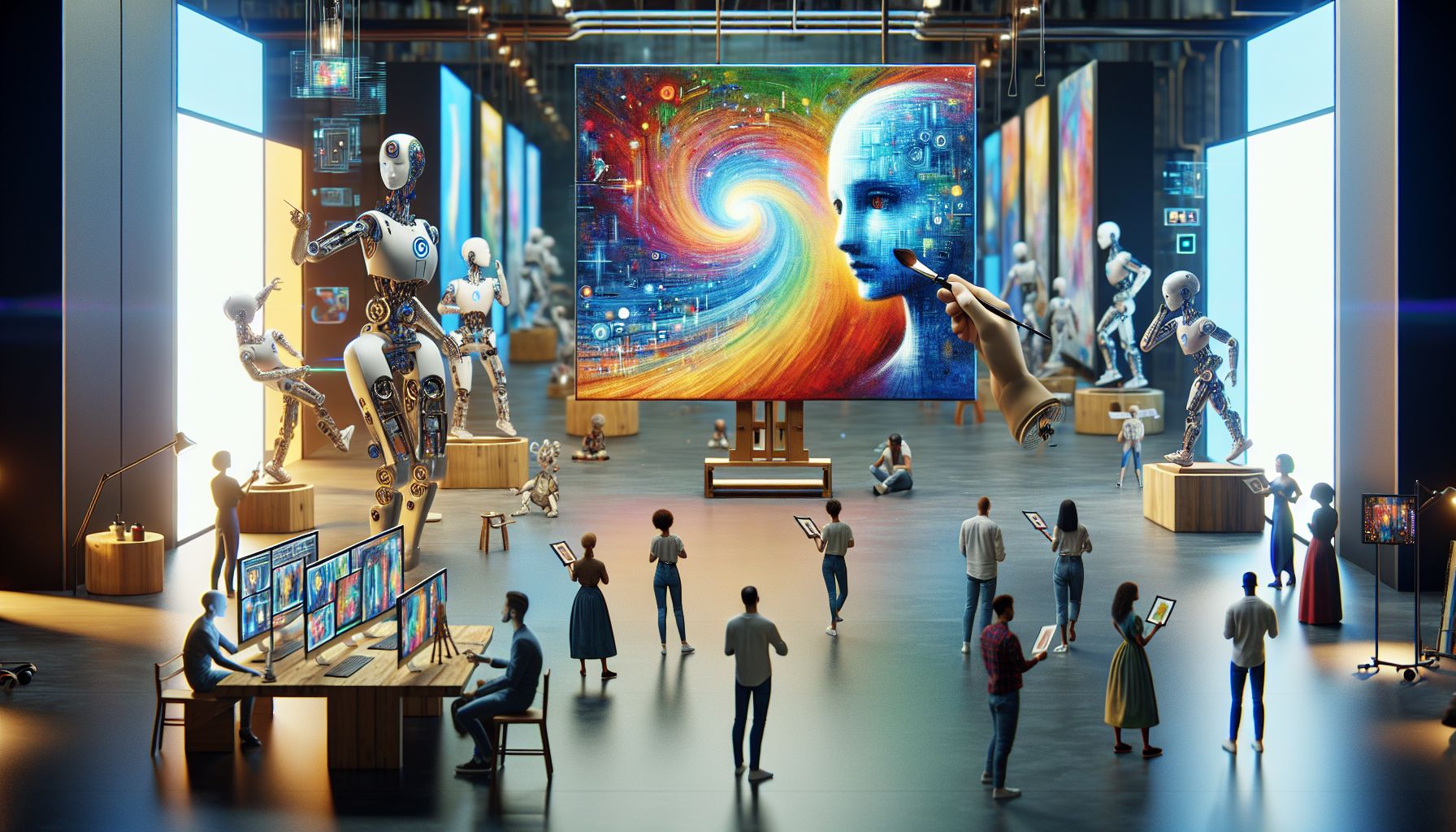
Alright pals, let me start with confessing that my multiple attempts to paint like Bob Ross have been abysmal failures. “Happy little trees” just don’t appear as happy when they appear in my artwork. And don’t even get me started on the “clouds”. But here’s the thing, while I may not be an artist, I’m a sucker for anything that has the words ‘tech’ and ‘revolution’ in the same sentence.
So when I heard about AI making its big entrance into art, I couldn’t help but roll up my sleeves and dig in. Here’s what I learned, and I gotta say, it’s quite a ride, my tech-savvy buds!
AI is Crafting Picasso 2.0
It all started innocently enough. Some smart folks at Google Brain came up with something called DeepArt or DeepDream algorithms with the deceptively simple idea of teaching machines how artistic styles work. Fast forward a few years, and we have AI generating pieces of art that sell for serious money. Remember the “Portrait of Edmond de Belamy”, the AI-painted portrait that sold for a whopping $432,500 at Christie’s? Yeah, that actually happened.
The Magic Paintbrush: How does AI do it?
The technology behind it is called Generative Adversarial Network (GAN for short), and it tries to mimic how the human brain creates. The basic setup has two neural networks, the generator and the discriminator. The first one creates the artwork, and the second one judges it. They’re like the struggling artist and stern art critic rolled into one. Think Dale Chihuly meets Simon Cowell, if you will!
Unleashing Creativity or Unraveling Pandora’s Box?
This weird fusion of AI and art has left the art world and techno-freaks like us wrestling with some big questions. Sure, machine-made artworks are turning heads (and opening wallets), but does it really count as being creative? Purists will tell you that art reflects human emotions, experiences, and unique perspectives. Something an AI, with all its coded ‘intelligence’, just doesn’t have.
When Stars Align: The Marriage of AI and Artists
But here’s a thought for those struggling with the idea of AI in art. What if we saw this as a collaboration rather than a competition? Plenty of artists are already working with AI, using it as a tool to push their creativity further. Take Anna Ridler, for instance, who used AI to generate hauntingly beautiful tulip landscapes that reflected Bitcoin’s volatility. Pretty clever, right?
The Future of Art: My Two Cents
As for me, I’m excited about what AI could do for accessibility. For all the da Vincis and Van Goghs out there, AI machines could work as a bridge, translating their artistic vision into the physical world. It opens up endless opportunities for people with physical limitations to express their ideas and emotions.
Besides, AI is only as good as the data we feed it. We humans fill it with the rich history of human culture, and we’re the ones who critique and appreciate what comes out. It can play Beethoven after analyzing his symphonies, but can it feel the music? At the end of the day, we need to remember that AI, no matter how advanced, is in our hands (quite literally!).
So looking at the big picture (pun totally intended), I’d say let’s welcome this new wave. Let’s move toward a future where the canvas is big enough for both human imagination and AI efficiency. After all, in the grand art world, there’s room for everyone, AI included. And if the day comes when an AI masterpiece makes your coffee shoot out through your nostrils because of sheer awe, remember, you heard it here first. So tell me, are you ready for an artistic revolution?